

Veterinary
Know which of your vet techs can do what, at every hospital
Xapify is a skills matrix for veterinary groups and hospitals. It verifies vet tech competency on the floor, where the work happens, and keeps a timestamped record for every tech, skill and hospital. Onboarding, career levels and re-verification all run from the same record.
The skills checklist is in a locker. The tech has moved to another hospital.
Most vet hospitals still verify skills the way they always have. A senior tech or a vet watches someone place a catheter, initials a paper checklist, and the checklist goes back in a locker, a car or a drawer. Then someone updates a spreadsheet. Eventually.
That holds together while you're one hospital with a handful of techs. Past 50 staff it stops working. New techs are on the floor before anyone has confirmed what they can do. Experienced techs who join from another practice get trained on things they already know. Each hospital tracks skills a little differently, so nobody can see across the group. And when a tech asks what they need for the next level, nobody can give them a straight answer.
Techs leave the profession when they can't see a way forward. Clear, verified skills are how you show them one. It's the same problem in every high-consequence industry, from vet hospitals to hospital wards.
How Xapify works in a vet hospital
Step 1
Set requirements once, by role and level
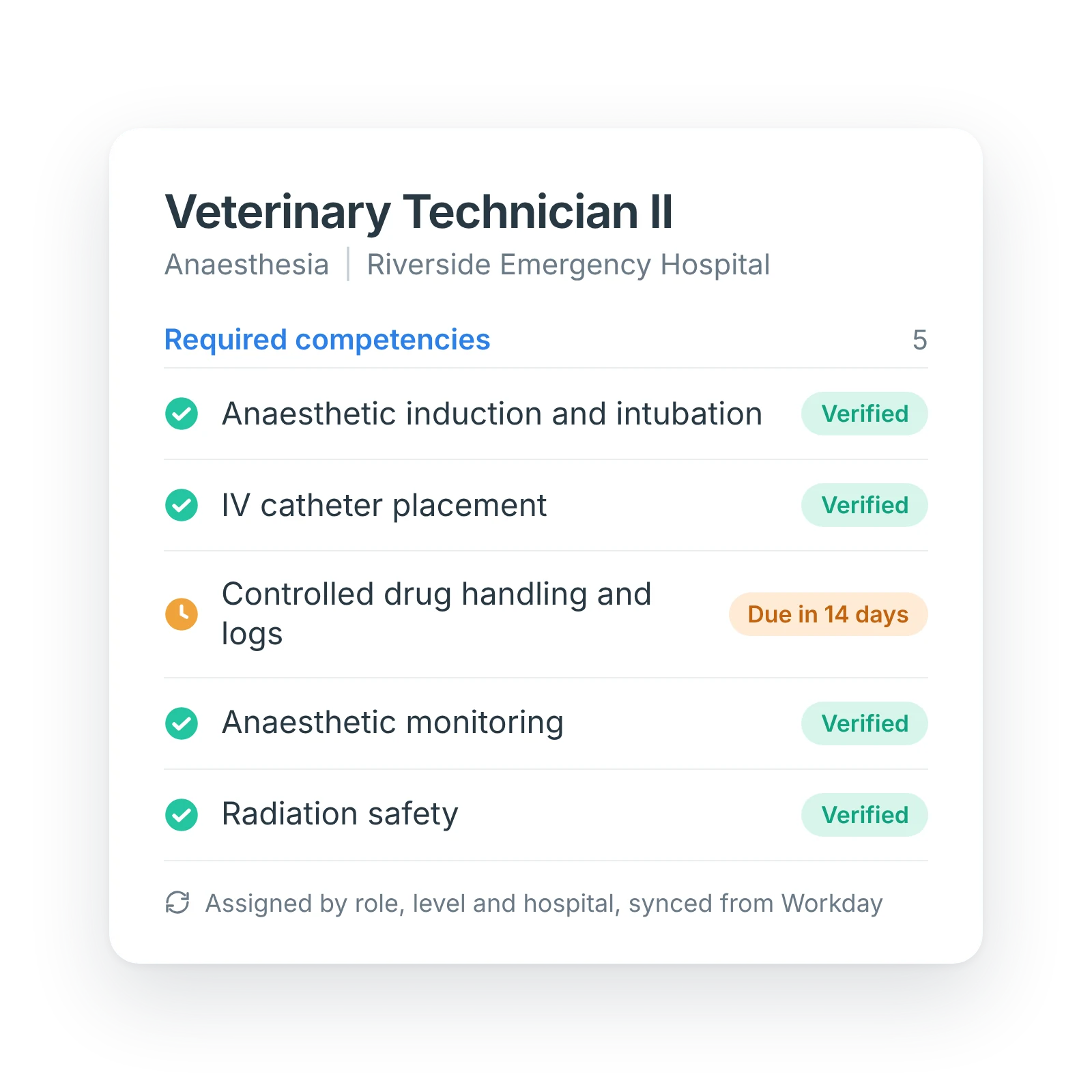
Decide what each role needs to be verified on. A Tech I in general practice, a Tech III in anaesthesia and an emergency tech each get the right competencies automatically, based on their role, level, specialty and hospital. When someone moves up a level or transfers to another hospital, their requirements follow them.
Requirements can differ by hospital and service, so a general practice and an emergency and specialty hospital in the same group can verify different things and still report in one place.
If you use Workday, Oracle, or SAP SuccessFactors, Xapify syncs people, roles, and locations from it, so nobody sets up new starters by hand.
Step 2
Verify on the floor
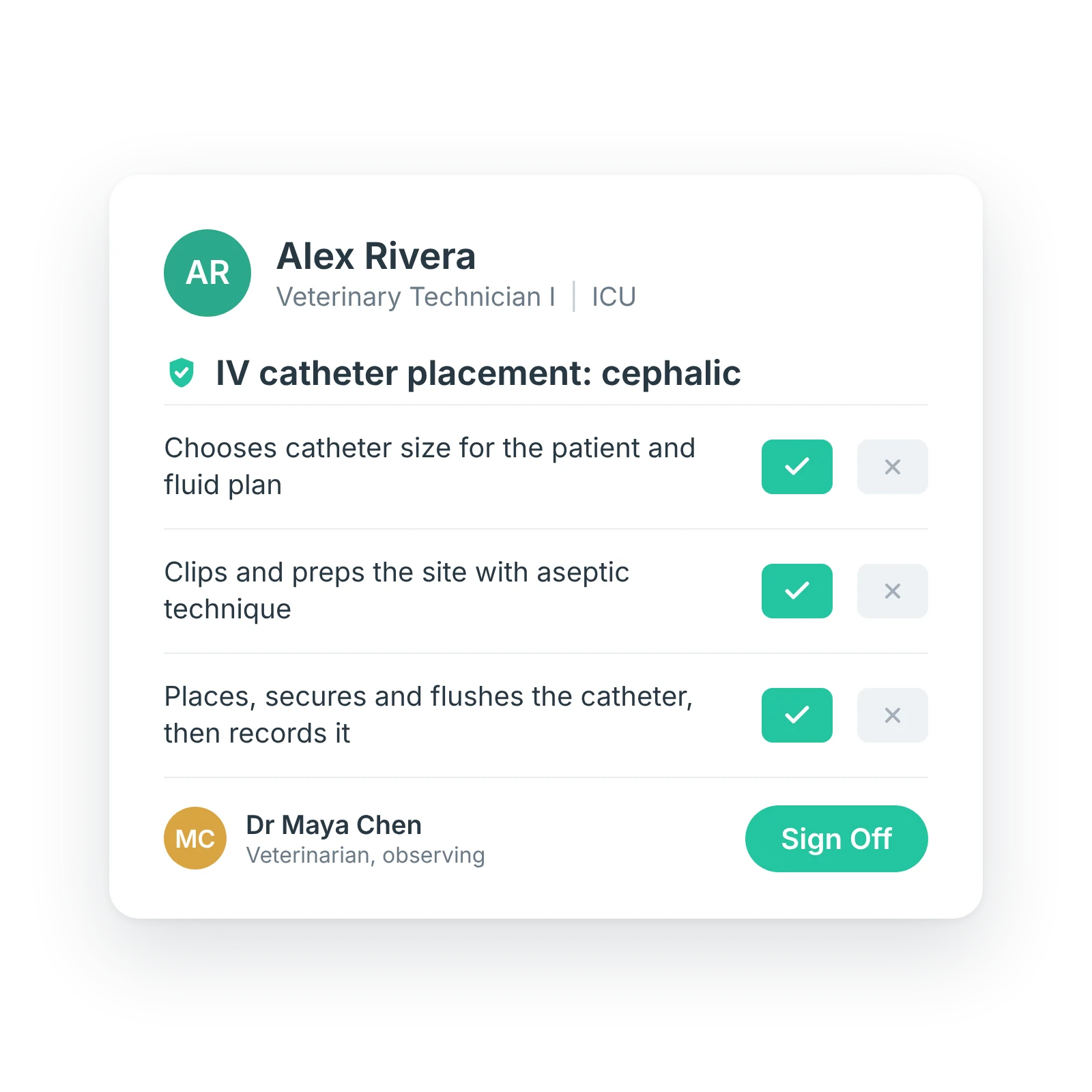
A senior tech or vet watches a newer tech place an IV catheter and signs it off on a tablet, in the treatment area, while it's fresh. Not from memory at the end of a double shift. Techs can request a sign-off themselves from their phone, so the next skill doesn't wait for a training day.
You decide who's allowed to sign off each competency. A senior tech might verify restraint and blood draws, while only a veterinarian or your anaesthesia lead can sign off induction and intubation. Every record shows who verified it.
Step 3
Match the method to the skill
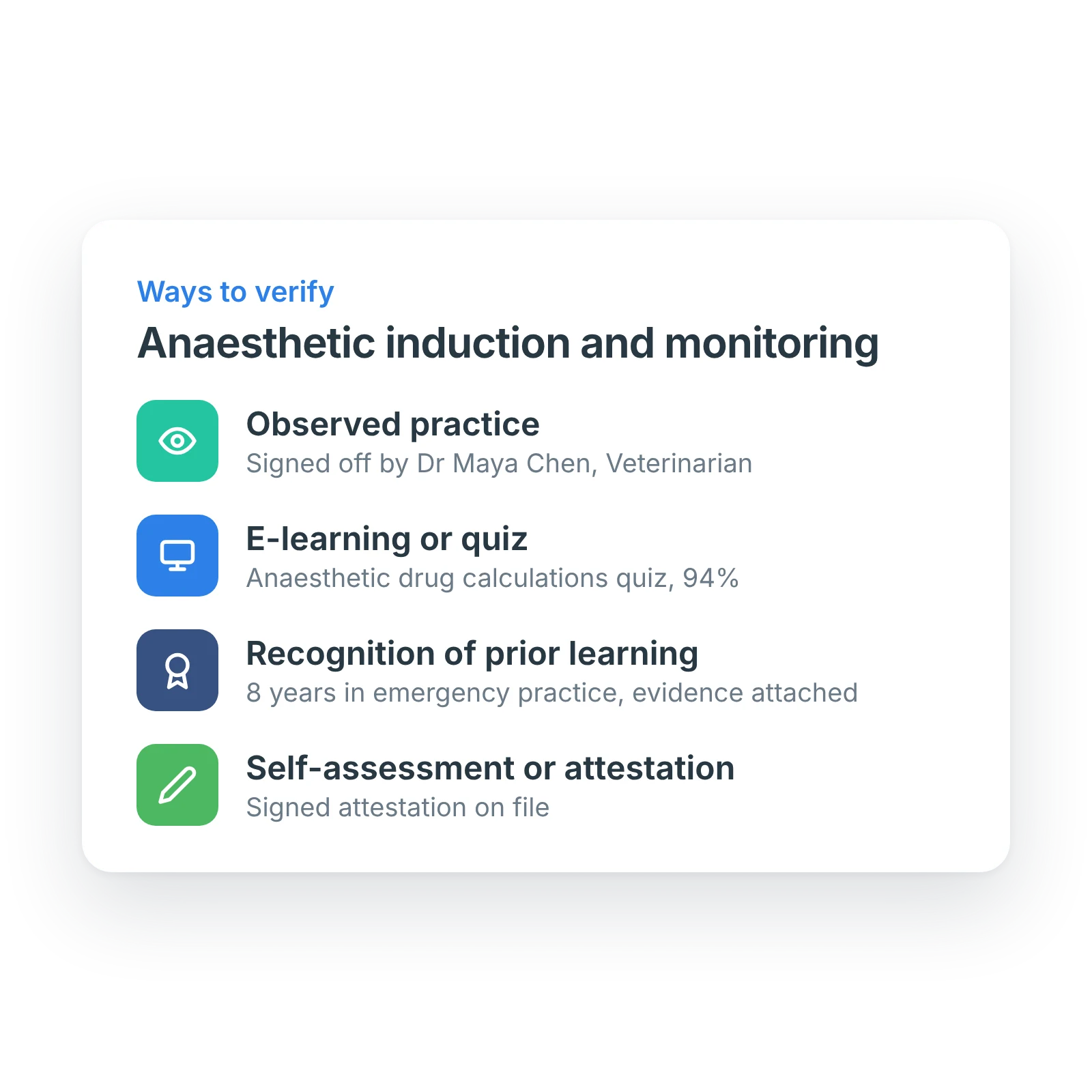
Not every competency needs the same kind of proof. Each one can be verified by:
- observed practice, with an assessor's sign-off
- an e-learning module or quiz
- recognition of prior learning
- self-assessment or a signed attestation
Watch a tech induce and monitor an anaesthetic. Quiz them on drug calculations. Recognise the eight years an experienced tech brings from their last hospital, and keep the record that shows why, so they aren't retrained on skills they already have. If a quiz doesn't suit someone, verify them by observation instead.
Step 4
See it across every hospital
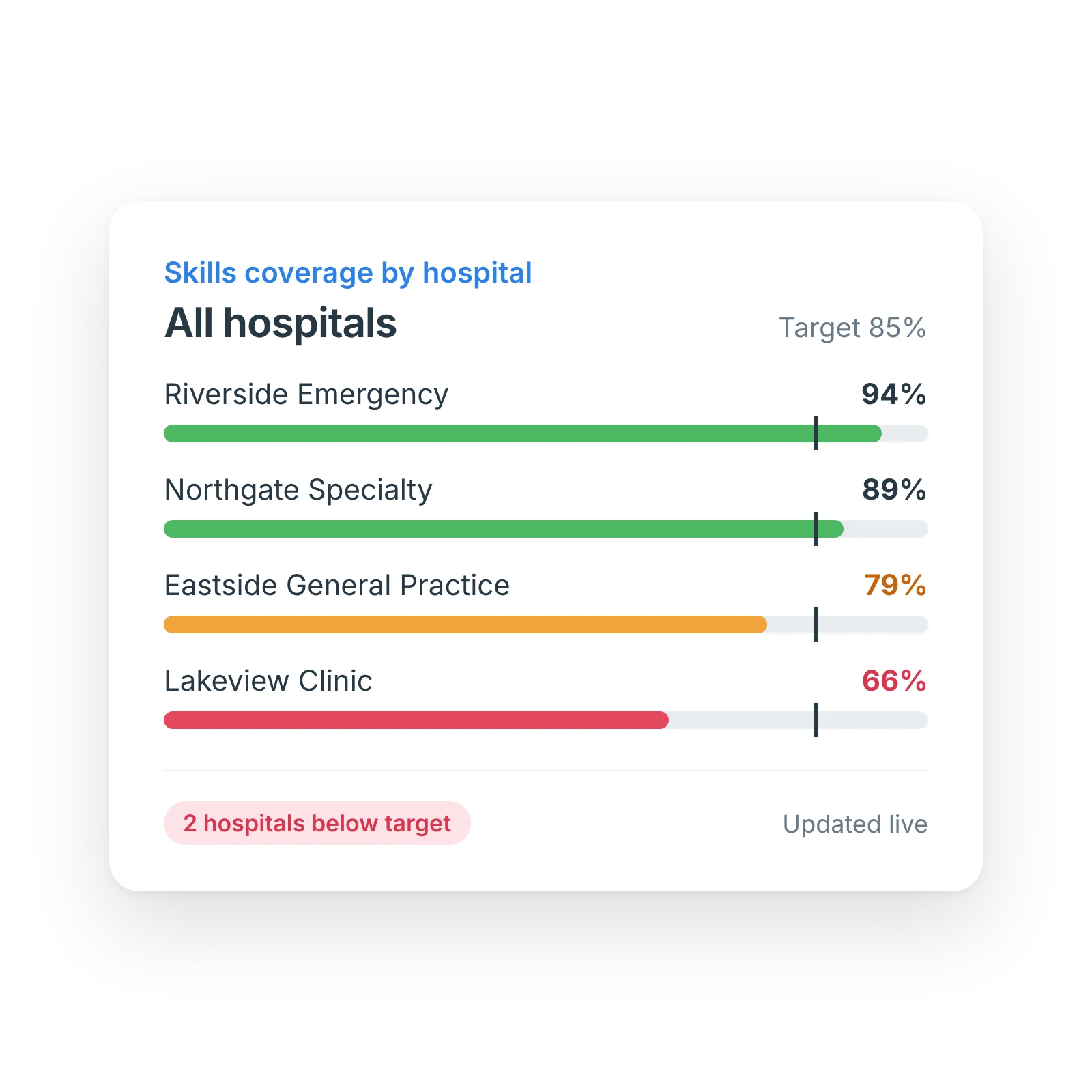
Reporting is live, by team, hospital, service or the whole group. You can see that a newly acquired clinic has nobody signed off on dental radiographs before you put dentals on the schedule, not after.
Every record is timestamped and exportable: who was verified, on what, by whom, how, and when. Pull it by tech, team, or hospital.
Xapify also tracks when each competency is due for re-verification, so CPR refreshers, radiation safety and controlled drug handling don't quietly lapse.
From triage to the dental suite
You build the competencies your hospitals need. Here's the kind of work you can verify:
Patient restraint and low-stress handling
IV catheter placement and fluid therapy
Anaesthetic induction, intubation and monitoring
Dental cleaning and dental radiographs
Radiography positioning and radiation safety
Controlled drug handling and logs
Triage, CPR and emergency response
Surgical prep, sterile technique and instrument care
A career ladder techs can actually see
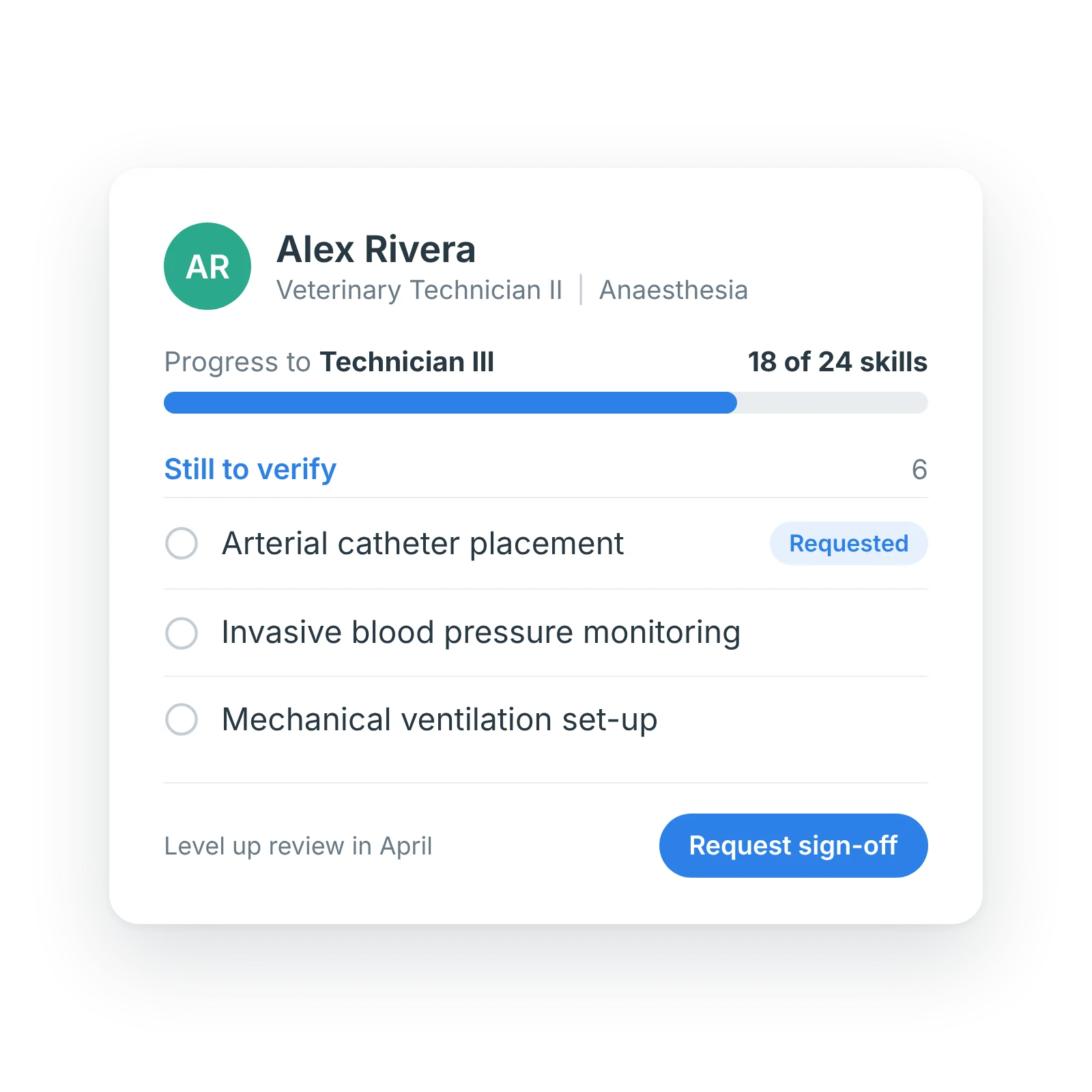
Vet techs often leave when they can't see the next step or what it takes to get there. A skills-based career ladder fixes that. Each level is a defined set of verified skills, usually tied to a new title and a pay rise.
Xapify puts the ladder in every tech's pocket. They see what's done, what's next, and who can sign it off, and they can ask for a sign-off when they're ready. Managers see who's ready to move up, and who's stuck and needs a mentor.
Building one from scratch? Read our guide to the vet tech career ladder.
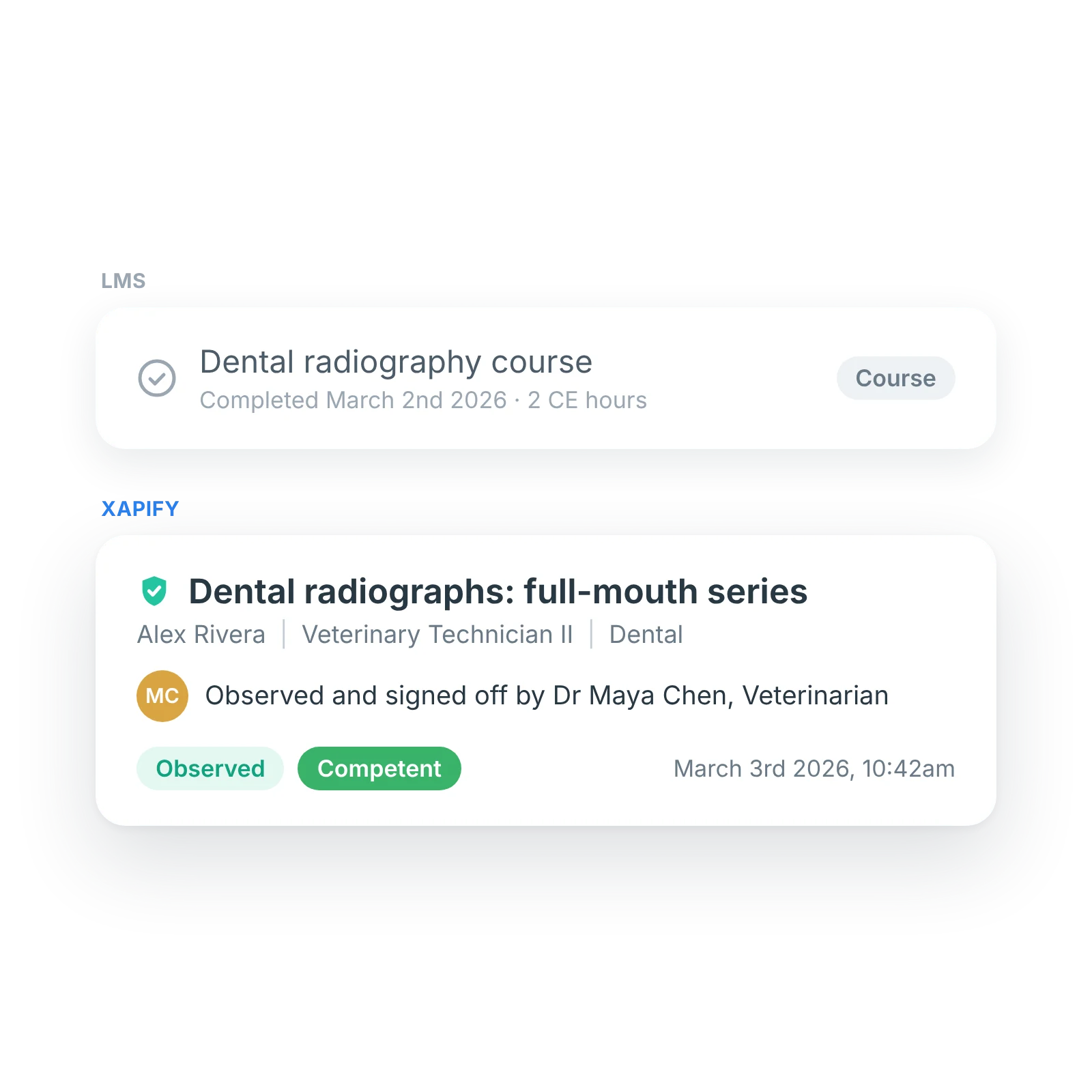
Your LMS records the course. Xapify records the competence.
A learning management system (LMS) or CE tracker can tell you a tech finished the dental radiography course. It can't tell you they took a full-mouth series correctly on Tuesday with a vet watching. Your medical director wants to know both, and only one of them lives in your LMS.
Xapify sits alongside your LMS and HR system. It doesn't replace them. Courses stay where they are. Xapify adds the part those systems were never built for: verified, signed-off competence on each skill, tied to each tech's role and level.
Who uses it
Medical directors and hospital managers
One view of which techs are signed off on what, at every hospital. Roster the skills you need on the floor.
Training and tech development leads
Set requirements by role and level once. New techs get the right skills from the day they're added.
Senior techs and mentors
Sign a tech off on a phone or tablet, then get back to the patient.
Vet techs
See what's done, what's next, and what stands between you and the next level.
Find out how Xapify’s Skills Matrix can help your hospitals
Book a 30-minute demo to see how we help veterinary groups onboard techs faster, build career ladders, and keep every skill verified.